

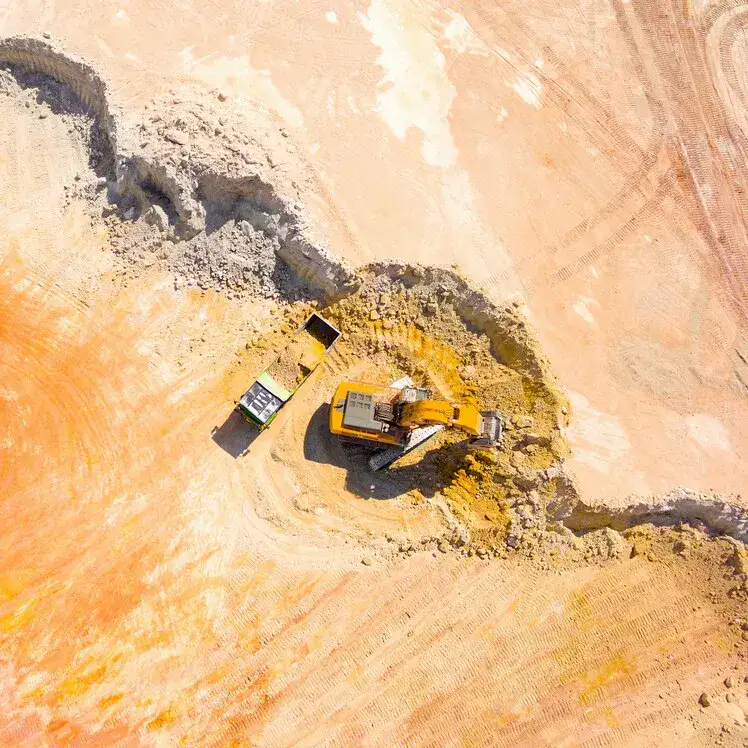

Mining operations leave a long legacy in the landscape. After decades of extraction, processing, and infrastructure use, contaminated soil is common. It’s also a significant risk not just for the landscape but also for the crews taking care of mine site clean-up.
Unmitigated contamination puts people, habitats, and waterways at risk, and threatens site remediation plans. That’s why operators and clean-up crews need to understand the unique soil contamination risks and design site-specific mine decommissioning and demolition strategies.
What Causes Soil Contamination on Mine Sites?
Hydrocarbon Leaks and Spills
Decades of fuel storage, vehicle maintenance, workshops, and leaky pipelines can lead to hydrocarbon build-up in the soil. Diesel, lubricants, and oily residues are among the most frequent contaminants.
Heavy Metals
Lead, arsenic, cadmium, copper, and mercury are heavy metals often found in tailings storage and mineral processing facilities. They can migrate through groundwater and stormwater pathways when not contained.
Chemicals and Reagents
Cyanide, acids, flotation chemicals, and solvents leave long residues. WA mine site clean-up guidelines recognise these as key contaminants requiring targeted assessment and remediation.
Hazardous Infrastructure Debris
As sites age, buried or deteriorating infrastructure creates additional hazards:
- Asbestos from historical buildings
- Lead-based paint flakes
- Contaminated pipelines, sumps, and concrete foundations
With more than 80,000 abandoned mines dotting the country, the soil contamination challenge is already monumental. Operators must do their part to prevent more damage.
Battery and E-Waste Leakage
Older batteries and discarded devices can leach acids, heavy metals, and organic pollutants into the surrounding soils. Electronic waste (E-Waste) is a growing problem in Australia. However, new battery recycling solutions are helping to reverse the trend and enable mine operators to electrify their fleet.
Read more: The Synergy of Electric Mining Vehicles and Battery Recycling in Western Australia.
Environmental Risks of Contaminated Soil
To understand the importance of soil remediation in mine site clean-ups, we first need to recognise the scale of the risk. Contaminated soil doesn’t just affect the immediate surroundings.
- Water contamination: Contaminants can leach into groundwater or wash into waterways during storms.
- Soil erosion and landscape instability: Cleared land and soil around tailings are particularly susceptible to erosion, creating a risk of spreading contamination.
- Risks to flora and fauna: High metal concentrations and chemical residues can inhibit plant regeneration and harm wildlife habitats.
- Dust contamination: Windblown particulates from contaminated soil or tailings can carry heavy metals, silica, or asbestos fibres, affecting communities and ecosystems.
- Human health risks: Exposure pathways include direct contact, dust inhalation, or consumption of contaminated groundwater.
- Land value: Contaminated sites cannot be developed or reused, turning a valuable asset into a money pit for the business that owns or leases the land.
Some of these risks are immediate, while others may not appear for years. In either case, the operator remains responsible for handing back a safe and remediated site.
Regulatory Requirements for Mine Site Clean-Ups in Western Australia
At a high level, the definition of contamination is clear, if a little broad:
“Contaminated – in relation to land, water or a site, means having a substance present in or on that land, water or site at above background concentrations that presents, or has the potential to present, a risk of harm to human health, the environment or any environmental value.”
- Source: Contaminated Sites Act 2003.
When it comes to mine site clean-ups, we need more operational guidance. This is where a robust regulatory framework helps to guide, inform, and enforce remediation efforts.
Legislation |
What it Covers |
| Mining Act 1978 and Mine Closure Plans |
|
| WA Contaminated Sites Act 2003 |
|
| National Environment Protection Measures (NEPMs) |
|
Transport and Disposal Obligations
Contaminated materials must also follow licensed transport pathways, including chain-of-custody documentation and transport to approved disposal facilities. Transport companies must hold a Controlled Waste Licence and follow Department of Water and Environmental Regulation (DWER) best practices around labelling, containment and dust suppression.
Identifying and Assessing Contaminated Soil
Before any physical remediation occurs, WA guidelines require a structured investigation process to understand the type, extent, and behaviour of contamination.
- Environmental Site Assessments (ESAs): Preliminary (PSI) and detailed (DSI) investigations, soil coring, groundwater monitoring, GIS mapping, and contaminant pathway mapping.
- Contaminant profiling: Analysing the metals, hydrocarbons, and organic compounds, and measuring pH and acidity
- Risk modelling: Predicting the impact on human health, environments, and waterways
These assessments ensure remediation decisions are targeted, compliant, and appropriate for the specific environmental risks.
Excavation and Removal
If contamination is localised and accessible, it might be possible to remove and replace the affected area. This entails removing contaminated soil for treatment or disposal before replacing it with clean fill.
On-Site Soil Treatment
Depending on the contaminant, treatment may include:
- Bioremediation for hydrocarbons
- Soil washing and leaching to reduce metals and chemical residues
- Stabilisation or immobilisation to bind metals and prevent migration
Scientific advancements continue to improve treatment outcomes.
Containment Solutions
When excavation or treatment is not feasible, the next step is containing the contamination:
- Capping and engineered barriers
- Tailings dam rehabilitation
- Long-term erosion and seepage control
Hazardous Waste Removal
To prevent ongoing contamination issues, aging and degraded infrastructure must be safely removed. This includes structures containing asbestos or lead paint, vehicles and batteries, E-waste, drums and chemicals, and any contaminated structures or footings.
Read more: Handling Hazardous Materials During Mine Site Clean-Ups.
Rehabilitation and Revegetation
Once the site is safe and contaminants have been removed, we can move on to remediation:
- Topsoil re-spreading
- Native seed application
- Biophysical erosion control systems
- Long-term monitoring
Positive signs in vegetation establishment and soil stability mean that the site is on the way to being useful once again.
How Metal Recycling Supports Mine Site Clean-Ups
Recycling metal during mine site clean-ups does more than clear the deck. It directly addresses contamination risks and strengthens environmental outcomes.
- Remove potential sources of contamination (pipelines, conveyors, structural steel and vehicles containing hydrocarbons or chemicals)
- Recover and recycle valuable metals to offset clean-up costs and support a circular economy
- Support ESG goals and remediation efforts through responsible and compliant disposal
As Western Australia’s leading partner in mine site clean-ups, C.D. Dodd brings the full toolkit: on-site sorting, high-volume industrial recycling, hazardous waste management, and integrated support.
We have over 50 years of experience in demolition, decommissioning, and remediation. The result is a cleaner site, a smaller waste footprint, and a more sustainable mine closure.
Speak to C.D. Dodd for safe removal of contaminated materials and full mine site remediation support across Western Australia.