

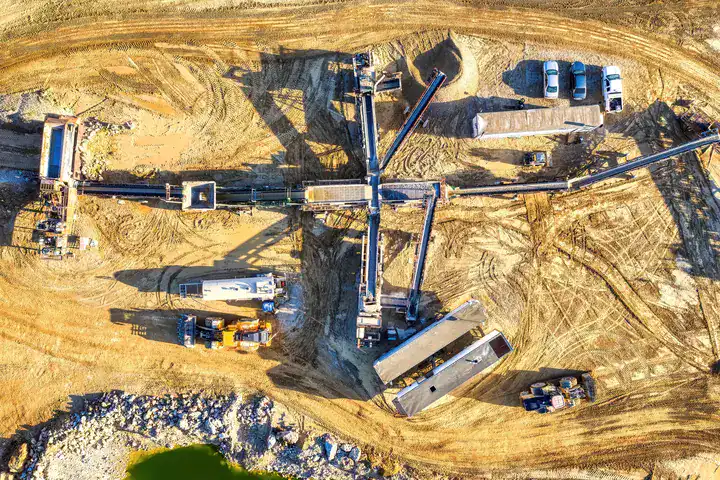

Demolition is a major milestone in the closure of a mine or industrial site. But bringing down structures and removing redundant equipment is far from the end of the job.
Once the physical infrastructure is gone, attention shifts to the waste materials left behind and the long-term condition of the site.
For operators to meet compliance obligations and community expectations, mine site rehabilitation in Western Australia requires a coordinated approach to demolition, resource recovery, waste management, safety and environmental restoration.
What Does Full Site Rehabilitation in Western Australia Actually Involve?
Full site rehabilitation is the process of returning land disturbed by mining and industrial operations to a condition that satisfies agreed environmental, safety and post-closure objectives.
Every mine operating in Western Australia holds an approved Mine Closure Plan. As part of that Plan, the Department of Mines, Petroleum and Exploration (DMPE) expects rehabilitated areas to be:
- Physically safe for people and animals
- Geotechnically stable
- Geochemically non-polluting
- Capable of sustaining an agreed post-mining land use
The exact outcomes differ from site to site. One operation may work towards revegetation and ecological restoration. Another may need the land prepared for a new industrial use and a third for grazing.
Either way, demolition only contributes to those outcomes. It does not deliver them on its own.
Key Stages of Site Rehabilitation After Industrial and Mine Demolition
Industrial and mine site rehabilitation in Western Australia can continue for years or even decades. It can happen at the end of the mine’s productive life – like Iluka’s Wagerup site, which began rehabilitation in 2009 and was fully relinquished in 2022 – or progressively throughout the site’s life – like Alcoa’s Huntly and Willowdale bauxite mine, which achieved its plant restoration goals while the project was operational.
In either case, a successful rehabilitation program starts well before the last operational day.
Mine site closure usually follows a defined sequence, with each stage setting up the one that follows. This interconnected planning minimises risks, improves efficiency and maximises value recovery.
1. Site Assessment and Rehabilitation Planning
The first step is understanding what remains and what needs to happen next.
That includes identifying redundant infrastructure, scrap metal, hazardous substances, contaminated materials and other waste streams.
In the short term, the initial assessment helps project teams and demolition contractors scope mobilisation, transport distances, equipment requirements and disposal pathways.
Access constraints and transport requirements also need to be considered. All of this is against the backdrop of setting up the site’s future use.
2. Demolition Debris and Waste Removal
Industrial demolition can generate a variety of waste:
- Concrete
- Structural steel
- Cabling
- Machinery
- Batteries
- Pipelines
- Oils and residual chemicals
- General waste
- Asbestos
Each follows a different pathway. Efficient segregation and handling keeps recoverable material out of landfill, contains hazardous materials, and makes disposal costs predictable. It also leaves the site safer for the subsequent rehabilitation work.
3. Scrap Metal Recovery and Recycling
Scrap metal recycling plays a significant role in mine site rehabilitation because industrial sites contain large volumes of recoverable material.
Steel structures, copper cable, aluminium components, stainless steel, machinery and other ferrous and non-ferrous metals can often be recycled and returned to productive use.
There are commercial and environmental benefits:
- Recovering value from scrap metal can offset project costs
- Recycling reduces the volume of material sent to landfill
- Recirculating useful material reduces demand for raw materials
- Supplying the circular economy supports local manufacturing and innovation
Scrap metal recovery should be considered early in industrial and mine site rehabilitation projects to maximise these benefits.
4. Hazardous Material Management
Legacy industrial and mine sites often contain hazards that require specialist management, including:
- Asbestos
- Hydrocarbons
- Fuels and oils
- Chemical residues
- Contaminated soils
- Lead-acid or lithium-ion batteries
Handling, transporting and disposing of these require the right licenses and equipment. Controlled waste carriers in Western Australia are licensed by the Department of Water and Environmental Regulation (DWER) and Main Roads WA. Every movement needs to be documented by a certified company.
5. Site Preparation
Removing the last piece of scrap does not necessarily mean rehabilitation is complete.
Depending on the approved Mine Closure Plan, the next stage may include:
- Remediating contaminated soil
- Containing or removing tailings
- Reshaping landforms
- Managing drainage
- Stabilising erosion-prone areas
- Replacing soil or supporting revegetation
The end goal is not just an empty patch of land. It’s a site that can safely and sustainably fulfil its post-closure function.
Although the level of activity is lower in this final phase, it is often the longest. Operators are usually required to monitor the site and provide transparent reports before the DMPE will approve a full relinquishment.
How Good Planning Solves Common Challenges During Mine Site Rehabilitation in Western Australia
Large industrial and mine rehabilitation projects are complex, to say the least. They often involve multiple stakeholder groups with different priorities, high-risk work, remote locations and tricky logistics, and sensitive native ecosystems.
Without coordination and planning, what would be a relatively straightforward challenge for an experienced mine site demolition partner becomes a costly and complicated headache.
Challenge |
How Early Planning Helps |
| Large, mixed waste volumes | Waste streams identified and pathways confirmed before demolition begins. |
| Remote site logistics | Coordinated mobilisation, scheduled collections, regional waste processing hubs and large-capacity transport. |
| Environmental compliance | Licensed carriers, correct classification and complete disposal records. |
| Multiple contractors on site | Clear scope boundaries and sequencing that keep everyone safe and productive. |
| High-risk work environments | Site-specific safety management planning, trained and licensed crews, and defined exclusion zones. |
| Close-out and site relinquishment | Documentation captured as work proceeds rather than reconstructed afterwards. |
Well-managed mine site rehabilitation in Western Australia protects our unique environment and sets up land for a productive next life. For operators working near regional communities, a site returned in good condition is a clear demonstration of stewardship and a boon to the social licence to operate.
It also supports sustainability and closure reporting, providing recovery volumes and processing pathways documented to a standard that holds up under audit.
There are also commercial returns. Well-managed sites with proper documentation move through closure milestones with fewer delays, and the value recovered from metal offsets costs that would otherwise sit entirely on the closure budget.
For mining companies, these are not separate objectives. Safety, environmental performance, commercial efficiency and stakeholder confidence are all closure and rehabilitation priorities.
How C.D. Dodd Supports Mine Site Rehabilitation in Western Australia
C.D. Dodd has spent more than 50 years working in WA’s most demanding environments. We support industrial and mine site rehabilitation in Western Australia from first assessment through to a cleared, documented site.
- End-to-end demolition, mine site clean-up and scrap metal recycling under one scope.
- Hazardous material handling, including battery recycling, hydrocarbons and controlled waste.
- Facilities in Perth, Kalgoorlie, Karratha and Port Hedland, with mobile plant for remote sites and DWER-licensed transport vehicles.
- ISO 45001, ISO 14001, ISO 9001, JAS-ANZ certification and Dangerous Goods transport licensing.
- Chain-of-custody documentation and recycling certificates to support closure and ESG reporting.
Proper mine site rehabilitation in Western Australia requires more than clearing waste from the landscape. It takes forward planning, compliant waste management, effective resource recovery, and partners who are committed to the rehabilitation goals.
Partner with C.D. Dodd for safe, compliant mine site rehabilitation in Western Australia, from industrial demolition and site clean-up to responsible scrap metal recycling and rehabilitation support.